The Neuroscience of Trading: Why Your Brain Struggles to Profit and How to Rewire It
Most people approach trading as a purely financial or mathematical challenge. However, as the latest neuroscience suggests, trading is fundamentally a problem of perception, learning, and neural adaptation under uncertainty. Our biological systems are not naturally designed to handle the extreme momentum and volatility found in modern markets.
To succeed, you don’t just need a better strategy; you need a better context.
What is the “Neuroscience of Context”?
In neurological terms, context is the structured set of external stimuli that modulates your perception, decision-making, and memory encoding. Your brain is constantly consuming signals from reality and processing them through a complex mathematical function. This function determines the “value” of a context based on several parameters:
- Novelty: How new is the information?
- Need Fulfillment: Does it satisfy a current biological or psychological need?
- Emotional Salience: Emotions like fear or joy increase attention and help “train” your memory.
Ultimately, context determines which neural circuits in your brain activate and whether those connections are reinforced or pruned.
The Language Learning Secret: Multi-Stimulus Engagement
Why is it easier to learn English by living in London than by reading a textbook in a prison cell? The answer is multi-stimulus learning.
When you are immersed in a “rich” context—like the streets of the UK—your brain is hit with 1,000x more stimuli. You aren’t just seeing words; you are hearing accents, smelling fish and chips, and feeling the emotional “social need” to communicate. This engages multiple neural systems simultaneously (visual, audio, vestibular), leading to rapid pattern recognition and automatic responses.
Trading, by contrast, is often a “poor” context. Reading charts in isolation lacks the multi-sensory feedback required for deep neural capacity.
Biological Bandwidth: Why “Housekeeping” is Mandatory
One of the most critical realizations for any trader is that brain resources are finite. You have a limited number of brain convolutions (folds), a finite amount of energy, and a limited supply of “memory molecules” and synapses.
When you attempt to learn in a polluted context—like a student trying to solve complex math while a TV blares, a phone buzzes with alerts, and they are feeling the pull of FOMO—you are wasting your biological bandwidth. Consuming non-relevant noise (like endless YouTube “talking heads” or social media hype) doesn’t just distract you; it physically prevents you from acquiring long-term knowledge, leaving your brain “messy”.
The Thesis: Housekeeping is necessary before training. Before you can build a professional model, you must deliberately clear out the “pollution” to ensure your limited neural resources are dedicated only to relevant, structured inputs.
The Feedback Trap: Luck vs. Skill
The primary reason trading is harder than language learning is the feedback gap.
- In Language: If you say something wrong, the person you’re talking to doesn’t understand you. You get immediate feedback, correct yourself, and improve.
- In Trading: You might take a trade and make a profit, but the cause remains unclear. Was it luck or skill?
High emotional stimulation without structured feedback creates an illusion of learning. Without a tight loop of action $\rightarrow$ feedback $\rightarrow$ correction, your neural network never actually updates its model for the better.
How to Build a Professional Trading Model
To stop “guessing” and start learning, you must deliberately design your own context. This involves three pillars:
- Structured Input: Filter out everything that isn’t essential to your specific psyche and strategy.
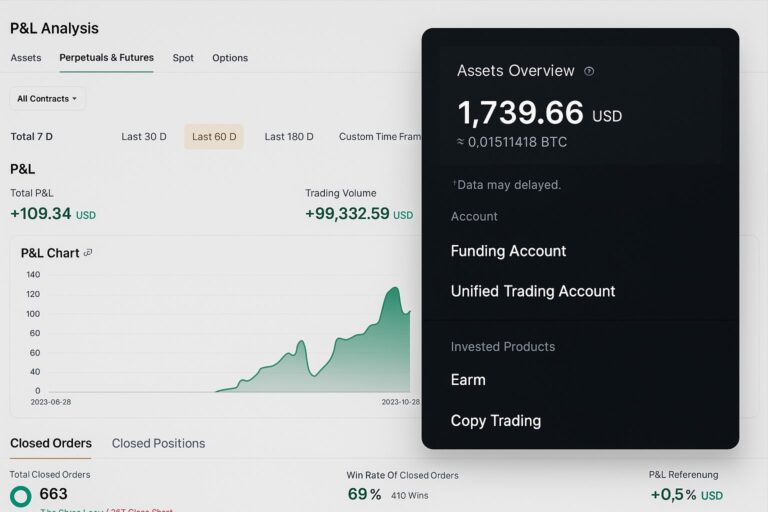
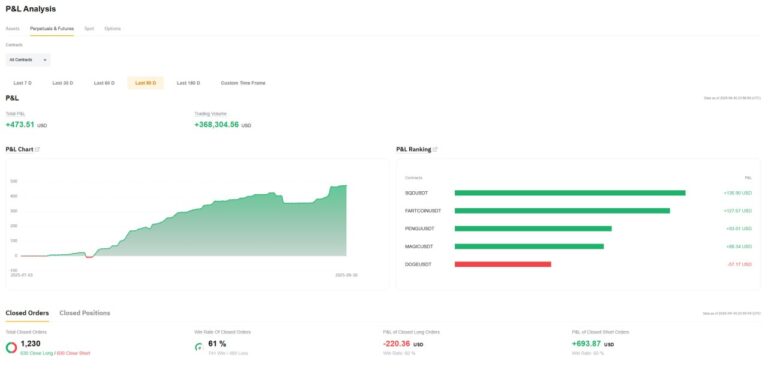
- Measurable Outcomes: Focus on your P&L (Profit and Loss) as the ultimate parameter. If your P&L isn’t growing over many iterations, your internal neural model is not updating correctly.
- Clear Feedback Loops: Treat every trade as an iteration in a data set. You need to link your results to specific parameters like market volatility and risk exposure rather than just “feeling” the market.
Conclusion: Performance only improves when you build a loop where action leads to structured correction. By clearing the noise and protecting your finite neural resources, you allow your brain to finally adapt to the uncertainty of the markets.
Make faster, smarter trading decisions with clear, explainable AI — not just signals with our AI Trading app.
Now available on:
Try it today.